Discover the most important Features to Check Before Buying a Car in 2026. Learn about safety, mileage, engine performance, technology, comfort, resale value, and more in this complete car buying guide. Today’s market is filled with countless options, including hatchbacks, sedans, SUVs, electric vehicles, and hybrid cars. Each comes with different technologies, safety systems, comfort features, and performance levels.
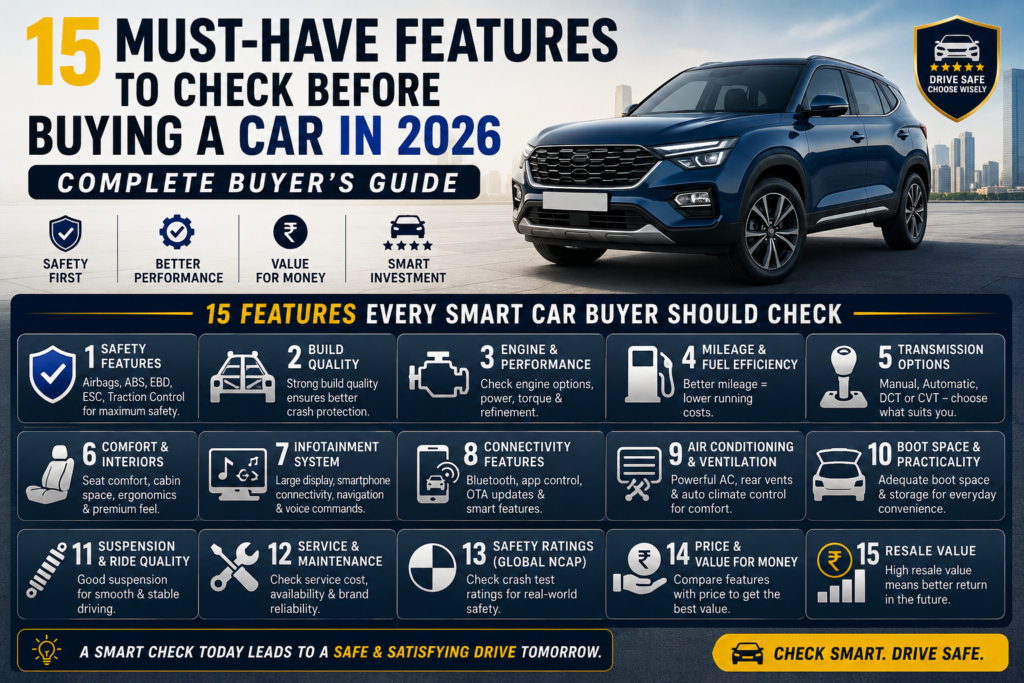
Many buyers focus only on price and design, but a smart purchase goes far beyond appearance. Features to Check Before Buying a Car in 2026. A car should match your lifestyle, budget, family needs, driving habits, and long-term expectations. Choosing the wrong vehicle can lead to higher maintenance costs, poor fuel economy, low resale value, and dissatisfaction over time.
This complete guide explains the most important features to check before buying a car. From engine performance and fuel efficiency to advanced safety systems and modern technology, you’ll learn everything you need to make a confident decision.
1. Define Your Budget Before Choosing a Car
Before looking at brands or models, you must decide how much you can realistically spend. Your budget should include more than the showroom price.
Expenses to Include in Your Car Budget
- Down payment
- Monthly EMI payments
- Insurance costs
- Fuel expenses
- Maintenance and servicing
- Registration charges
- Road tax
- Extended warranty
- Accessories and upgrades
A car that looks affordable initially may become expensive to maintain later. Luxury vehicles often come with higher insurance premiums and expensive spare parts.
Why Budget Planning Matters
Setting a budget helps narrow your options and prevents overspending. It also ensures you choose a car you can comfortably maintain for years.
2. Engine Performance and Power
The engine is the heart of any vehicle. Understanding engine performance helps you choose a car that suits your driving style.
Petrol vs Diesel vs Hybrid vs Electric
Petrol Cars
- Lower initial cost
- Smooth and quiet driving experience
- Best for city driving
Diesel Cars
- Better mileage
- Higher torque for highways
- Ideal for long-distance travel
Hybrid Cars
- Combination of fuel and electric power
- Excellent fuel efficiency
- Eco-friendly option
Electric Vehicles (EVs)
- Zero tailpipe emissions
- Lower running costs
- Advanced technology features
Engine Capacity and Horsepower:-
Cars with larger engines generally produce more power, but they may consume more fuel. Consider horsepower and torque depending on your needs.
- City driving: Smaller engine works well
- Highway driving: Higher power is useful
- Family travel: Balanced performance is ideal
3. Fuel Efficiency and Mileage:-
Fuel prices continue to rise, making mileage one of the most important factors when buying a car.
Why Mileage Matters
A fuel-efficient car saves thousands of dollars over time. Even a small difference in mileage can significantly affect your long-term expenses.
Tips to Check Fuel Efficiency
- Compare official mileage ratings
- Read real-world owner reviews
- Check city and highway mileage separately
- Compare fuel tank capacity
Best Cars for Fuel Economy
Hybrid and electric vehicles usually provide the best efficiency. Compact hatchbacks and modern sedans also offer excellent mileage.
4. Safety Features Should Never Be Ignored
Safety is one of the most critical features to check before buying a car. Modern vehicles now include advanced technologies that protect drivers and passengers.
Essential Car Safety Features
- Airbags
- Anti-lock Braking System (ABS)
- Electronic Stability Control (ESC)
- Traction Control
- Rear Parking Sensors
- Rearview Camera
- Seat Belt Reminder
- Tire Pressure Monitoring System (TPMS)
Advanced Safety Features
Premium cars now offer Advanced Driver Assistance Systems (ADAS), including:
- Lane Keep Assist
- Adaptive Cruise Control
- Blind Spot Monitoring
- Automatic Emergency Braking
- Collision Warning Systems
Check Crash Test Ratings
Always review crash safety ratings from trusted organizations before buying a car.
5. Comfort and Interior Quality
A car should provide a comfortable experience, especially if you travel frequently.
Important Interior Features
- Adjustable seats
- Ventilated seats
- Spacious legroom
- Headroom
- Premium upholstery
- Automatic climate control
- Rear AC vents
- Noise insulation
Why Comfort Matters
Comfort directly affects driving experience and passenger satisfaction. Long journeys become easier when seats and cabin quality are excellent.
6. Infotainment and Technology Features
Modern buyers expect smart technology inside their vehicles.
Must-Have Technology Features
- Touchscreen infotainment system
- Apple CarPlay and Android Auto
- Bluetooth connectivity
- USB charging ports
- Wireless charging
- Voice commands
- Navigation system
- Digital instrument cluster
Smart Connected Car Technology
Some modern vehicles include:
- Remote engine start
- Mobile app connectivity
- Vehicle tracking
- Remote climate control
- OTA software updates
These features improve convenience and driving experience.
7. Transmission Type: Manual vs Automatic
The transmission system affects driving comfort and performance.
Manual Transmission
Advantages:
- Lower cost
- Better control
- Higher fuel efficiency in some cases
Disadvantages:
- More tiring in traffic
Automatic Transmission
Advantages:
- Easier city driving
- Smooth gear shifting
- Better convenience
Disadvantages:
- Higher purchase price
Types of Automatic Transmissions
- CVT
- AMT
- DCT
- Torque Converter
Each transmission offers different driving characteristics.
8. Space and Practicality
The size of the vehicle should match your daily needs.
Questions to Ask Before Buying
- How many passengers will travel regularly?
- Do you need extra luggage space?
- Will you use the car for family trips?
- Do you need foldable rear seats?
Boot Space Matters
SUVs and sedans usually provide larger cargo areas. Families often benefit from additional storage space.
9. Ride Quality and Suspension
A smooth ride improves driving comfort and reduces fatigue.
What Affects Ride Quality?
- Suspension tuning
- Tire quality
- Vehicle weight
- Wheel size
Why Test Drives Are Important
Always take a test drive before finalizing your decision. Pay attention to:
- Steering response
- Brake performance
- Cabin noise
- Suspension comfort
- Acceleration
10. Maintenance Costs and Reliability
A reliable car saves money and reduces stress.
Check Maintenance History
Research:
- Average servicing cost
- Availability of spare parts
- Service network coverage
- Warranty support
Reliable Car Brands
Some manufacturers are known for durability and low maintenance costs. Research owner feedback and long-term reliability reports.
11. Resale Value and Market Demand
Resale value determines how much money you recover when selling your car.
Factors That Affect Resale Value
- Brand reputation
- Vehicle condition
- Mileage
- Fuel type
- Maintenance records
- Market demand
Why High Resale Value Matters
Cars with strong resale demand reduce overall ownership costs.
12. Ground Clearance and Road Conditions
Road quality varies depending on location.
Why Ground Clearance Is Important
Higher ground clearance helps:
- Handle rough roads
- Prevent underbody damage
- Improve confidence on uneven surfaces
SUVs usually offer better clearance than sedans.
13. Tire Quality and Braking Performance
Tires and brakes directly affect safety.
Important Tire Features
- Tire grip
- Durability
- Noise level
- Wet-road performance
Braking Systems to Check
- Disc brakes
- ABS
- Brake Assist
- Electronic Brakeforce Distribution (EBD)
Strong braking performance reduces accident risks.
14. Environmental Impact and Emissions
Many buyers now prefer eco-friendly vehicles.
Eco-Friendly Vehicle Options
- Hybrid cars
- Electric vehicles
- Low-emission petrol engines
Benefits of Green Vehicles
- Lower fuel costs
- Reduced pollution
- Government incentives in some regions
15. Warranty and After-Sales Service
After-sales support is essential for long-term ownership satisfaction.
What to Check in Warranty Coverage
- Engine warranty
- Battery warranty
- Electrical coverage
- Corrosion warranty
- Roadside assistance
Why Service Network Matters
A strong dealership and service network ensures faster repairs and easier maintenance.
Best Tips Before Finalizing Your Car Purchase
Compare Multiple Cars
Never buy the first car you see. Compare features, prices, and reviews.
Read Customer Reviews
Owner reviews provide real-world insights about reliability and performance.
Take Multiple Test Drives
Drive the vehicle in different conditions whenever possible.
Check Insurance Costs
Some cars have significantly higher insurance premiums.
Negotiate Smartly
Dealerships often provide discounts, exchange bonuses, and free accessories.
Common Mistakes to Avoid When Buying a Car
Buying Based Only on Looks
A stylish design does not guarantee good performance or reliability.
Ignoring Long-Term Costs
Maintenance, fuel, and insurance can become expensive.
Skipping the Test Drive
Never purchase a vehicle without driving it first.
Not Checking Safety Ratings
Safety should always be a top priority.
Choosing Unnecessary Features
Avoid paying extra for features you may never use.
How to Choose the Right Car for Your Lifestyle
Best Cars for City Driving
Compact hatchbacks and small sedans are ideal because they are fuel-efficient and easy to park.
Best Cars for Families
SUVs and MPVs provide more space, comfort, and safety.
Best Cars for Long Highway Trips
Diesel sedans and SUVs often provide better cruising comfort and fuel economy.
Best Cars for Eco-Conscious Buyers
Electric and hybrid vehicles reduce environmental impact.
Conclusion
Choosing the right vehicle requires careful research and planning. The best car is not always the most expensive one — it is the one that fits your needs, budget, and lifestyle perfectly.
Before making your final decision, focus on essential Features like safety, fuel efficiency, engine performance, comfort, technology, maintenance cost, and resale value. A thorough comparison and proper test drive can save you from costly mistakes.
By following this complete car buying guide, you can confidently select a vehicle that delivers excellent performance, reliability, and long-term value.
Invest time in research today, and you’ll enjoy a smarter, safer, and more satisfying driving experience for years to come.